5 min read
"Your Misfortune is Actually Your Own Choice"

This article is Lu Canwei's 30th original piece.
Click the blue 【Lu Canwei】 above to follow; remember to add a ⭐️ star mark~
Those who follow me know that my public account has been updating very slowly, and each article is quite lengthy. If I don't find something particularly worth sharing, I generally won't write, which leads to only one or two updates a month.
Recently, chatting with Brother K gave me a significant change in perception. Brother K is a top-tier expert in areas like fission, enterprise WeChat marketing, and traffic strategies. He previously thought these were basic operations within his circle, but after interacting with different circles, he realized that his knowledge is extremely valuable to others, so he is very willing to share, and we have gained a lot from it.
In fact, we often overestimate ourselves in the short term and underestimate ourselves in the long term. One major takeaway from the recent night talk in Shenzhen is the recognition of self-worth. For example, if you think a big shot is impressive and you might only have one-tenth of their level, you might feel embarrassed to share. But you should know that many people are only at one percent of their level; they can become one-tenth of them by learning from you.
It's easy to fall into a vicious cycle: I think my knowledge has no value, so I don't share, and then my knowledge indeed has no value. This is similar to a viewpoint I saw in Li Xiaolai's "Being Friends with Time," which is about self-fulfilling prophecies.
Self-fulfilling Prophecy
I wonder if anyone has had the experience of believing that something will happen, and then it has a high probability of occurring.
For example, you need to prepare for a speech, and you desperately memorize the script, worrying that you might forget your lines, and then when you get on stage, you forget your lines after just a few sentences.
Or you think a project will be delayed, and it really does get delayed.
The only thing that won't happen is thinking you'll become rich overnight while still struggling with daily expenses.
The Story of Oedipus
The earliest mention of this concept was by Professor Robert K. Merton. If people believe something will happen, then it will eventually happen.
In Greek mythology, there is a tragic figure named Oedipus. Early on, his father received a prophecy that he would be killed by his own son, so Oedipus was abandoned in the wilderness at birth. Later, he was rescued by a shepherd and became the adopted son of the king of a neighboring country. When Oedipus grew up, he received a prophecy that he would kill his father and marry his mother. To avoid this prophecy from coming true, he left and vowed never to return.
At that time, the Sphinx in the city demanded passersby solve the riddle: "What creature walks on four legs in the morning, two legs at noon, and three legs in the evening?" Those who could not answer would be devoured by her.
Oedipus's biological father was looking for a way to defeat the Sphinx and encountered Oedipus on a narrow road where only one person could pass. They did not recognize each other, and after a dispute, Oedipus ended up killing his biological father.
Later, Oedipus defeated the Sphinx and was elected king. According to custom, he married his biological mother and had two sons and two daughters.
Eventually, disasters and plagues struck the city, and only after learning the truth did Oedipus realize he had killed his father and married his mother. His mother, filled with shame, hanged herself, and a devastated Oedipus blinded himself.
Similarly, in a bank run, if everyone believes the bank is failing and goes to withdraw their money, the bank runs out of money and goes bankrupt.
We often resolve to "not change."
For us, it's the same: if I think I can't learn, then I really can't learn. As children, we often envied other people's kids, thinking that if we could be like them, we would be happy. In fact, it's just a form of self-avoidance, preserving the possibility of "I could do it too" by not doing it, so we won't be judged by others and won't face the reality of failure.
Many people feel that they are no longer young and can't learn anymore. They think that if they had learned earlier, things would be different now. I'm sure you've heard the saying, "The best time to plant a tree was ten years ago. The second best time is now."
Take writing, for example; someone once told me that it was impressive that I could write my own stuff, and they wished they could do the same. So we should strive to change; even if we might fail, we should still try. This way, we can grow, and even if it ultimately doesn't work out, we can understand other principles of choice. If we never try, we won't develop.
It's like a joke in the tech community: "After learning Python for over a year, I finally realized I'm not cut out for it. Now I'm making a million a year in real estate. Thank you, teacher!"
No matter what has happened in your life before, it does not affect how you will live your life in the future. What determines your life is the "you" living in the present moment.
This is Adler's teleological perspective, which differs from Freud's causal perspective. Freud believed that the past leads to your present; for example, people might say, "I am the way I am because of my upbringing." They might think, "I didn't study before, so I can't learn now."
Teleology focuses more on purpose. For instance, a child might act out simply to get attention, rather than due to a lack of discipline in childhood.
In conclusion,
The insights above are what I recently gained from reading Li Xiaolai's "Treating Time as a Friend" and "The Courage to Be Disliked." Thanks to the friends who recommended these books. Escaping the comfort zone, acknowledging one's ignorance, and accepting oneself is indeed challenging. However, I believe no one is unwilling to grow, yet we often hear many truths and still feel we can't live this life well.
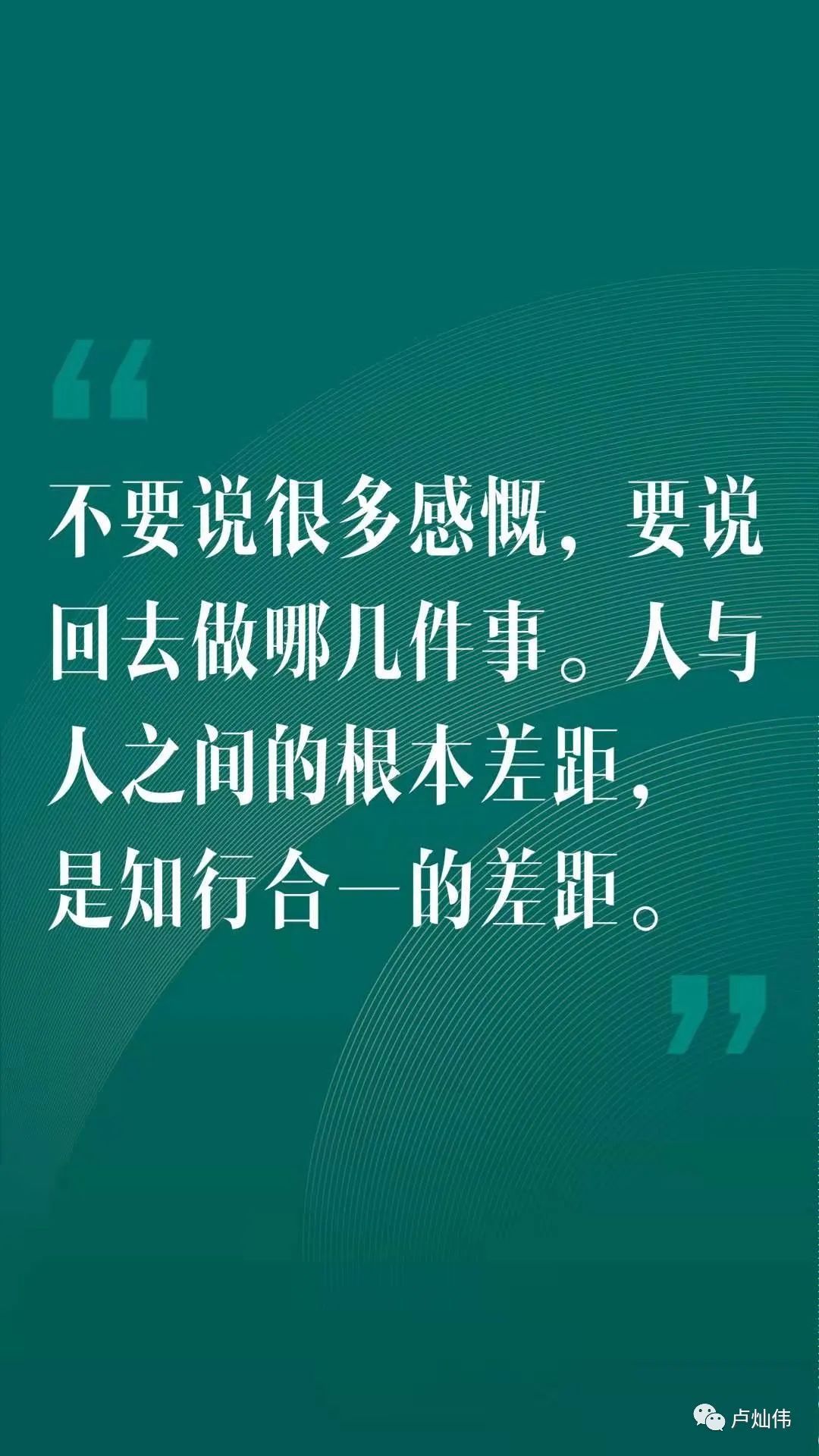
Perhaps this image (thanks to the sharing from Guanghe) can help you. If this article inspires you, then it is also my motivation to continue sharing.
Recommendations:
My 2020 Summary
Community Group Buying: Why Giants Are Frenziedly Entering This Market with Just a Few Bundles of Cabbage
Next-Generation Note-Taking App Notion: How I Use It to Manage Knowledge
Scan to follow 【Lu Canwei】, and send "Self-Media Materials" in the background to receive two free benefits:
1. A self-media tool kit (valued at 1999 yuan)
2. An electronic version of the "2020 Wealth Calendar," containing 365 money-making tips;
Additionally, the community regularly hosts online sharing sessions on wealth themes~
Appreciation has been canceled; "Looking" is the strongest support ↘