9 min read
"Independent Development Diary 15: The Public Account is Still Promoting Claude Code, While Twitter Has Long Been Abandoned"
Using disadvantages to attack advantages will surely lead to defeat.
Recently, the incidents involving Xibei and Lao Luo have become very popular. Even I couldn't help but spend some time following the gossip. Later, I thought about it and realized that this wasn't right, so I set up some blocked words and haven't seen much about it since.
To put it bluntly, it's Lao Qian's arrogance; he looks down on internet celebrities like Lao Luo from the bottom of his heart. He thinks, "I'm a successful entrepreneur, and you've failed in business, so what are you?" Yet he insists on engaging in public opinion warfare with Lao Luo, who has a track record of taking down many people in the past, all of which can be verified. Isn't it just a lonely pursuit of defeat to use one's disadvantages to attack someone else's advantages?
I remember when I was working in Shanghai, there was a Xibei restaurant near the company. Sometimes, when we had group meals, we would go there to eat. At that time, the reputation wasn't too bad because there weren't many choices. Everyone knew it was pre-prepared food, but not many paid attention to it because you couldn't avoid it in any restaurant in the mall.
To be honest, I can't say it was delicious, but it wasn't terrible either. As for the price, if I were to spend the same amount, I could go to a restaurant that I think tastes better. However, Xibei's locations are mostly in malls or next to office buildings, so its audience is largely white-collar workers who require quick service, decent taste, and a good environment, which basically meets the requirements for group dining. As for the children's meals, I don't understand; perhaps they have been targeting families more in the past two years.
People's expectations for it are just like that, but pride doesn't allow them to admit it; they have to believe they are a very high-end restaurant, which ultimately backfires. It's like claiming to have developed a project based on open-source code, only to be exposed. Saying they aren't pre-prepared but rather premium, selling steamed buns for over 20 yuan is very reasonable, and thus they were exposed.
Like the 188 yuan lettuce salad we sometimes see online, why are there so few complaints about the restaurant? People are just complaining about the exchange rate of the Shanghai currency being different. But everyone recognizes that the premium part is the overall atmosphere, emotions, etc., the so-called beautiful meal.
To put it simply, the business owner is too far removed from the consumer and looks down on customers, thinking, "You don't understand how great we are." It's like developing a really cool website, and when users say, "Why can't I access your site?" only to find out they typed the wrong URL. It's all about making incorrect assumptions about others based on one's own knowledge.
The way to drink Yakult.
Let me mention another cognitive gap. I believe everyone has drunk Yakult, but many kids in Guangdong, I don't know if it's everyone, but the people around me at that time would bite the bottom of the plastic bottle to drink it, instead of using a straw or anything. It wasn't until I started working in Shanghai that I found out no one bites the bottle.
As for why this happens, I don't know; it was just how the people around me did it back then. If you were the owner of this product and saw this phenomenon, you would probably have a lot to say.
Now, let's talk about pre-prepared food. Personally, I feel that pre-prepared food and meal kits should be considered two separate concepts. Pre-prepared food, in my current view, leans more towards semi-processed food, like fish that is already cleaned and just needs to be thawed and cooked at the store. Meal kits are simply microwaved and poured out, which is a fundamental difference.
I'm not against pre-prepared food. With the development of industrialization, people's pace of life is getting faster, and it's unavoidable. Even here in Thailand, 7-11 has plenty of heated boxed meals, and I often eat them because they're convenient; I can just go downstairs to buy them. I think everyone should understand pre-prepared food, but you can't just lie and say it's not pre-prepared when it clearly is. With information being so transparent now, isn't that just asking for trouble? I believe honesty is more important for businesses than anything else.
Is Claude Code still popular? Actually, everyone has moved to Codex.
Recommendations can be a terrifying thing. For example, I initially just wanted to upload some videos I had previously shot to TikTok and Douyin, but after uploading, I ended up scrolling through the feed, and time just flew by. I haven't filmed any videos in the past two months mainly because I feel that the feedback on videos isn't much right now; it's too competitive, and as a beginner, it takes a lot of time—shooting and simple editing can easily take up an entire afternoon. Currently, writing one article a week isn't too stressful, but starting next week, I plan to increase it to two articles a week, intending to write more on popular science topics. I'm considering writing about Stripe.
I've also turned off the Moments and video accounts in my WeChat discovery section; it doesn't hold much significance for me right now. My main source of information is on Twitter. For instance, recently, everyone has migrated to Codex, and basically, everyone has unsubscribed from Claude Code. However, the popular posts on public accounts are all about Claude Code's magic tools and how to use them effectively. Currently, it seems the information gap is about two weeks, which is also why knowledge-paying bloggers can continuously attract clients.
Claude Code has become quite dumbed down; it's basically very difficult to complete a task independently and requires constant correction and rollback. Of course, some people might criticize me for not using it well, but I have 18 years of development experience, so I shouldn't be considered a novice. I can also say that despite being criticized and tormented countless times, I still treat everyone like my first love.
No more jokes; I'll stop here. These seemingly unrelated matters actually share a common logic: the information gap. Whether it's between businesses and consumers, between development tools, or between the concepts of pre-prepared food, everyone has different viewpoints and opinions. However, human knowledge reserves are limited, just like most Chinese men don't understand makeup, while I know several Korean men who all wear makeup. We can't assume that others share the same information concepts as us, nor can we assume that they are willing to learn our information; it's more about tolerance and understanding.
Prompt Engineering
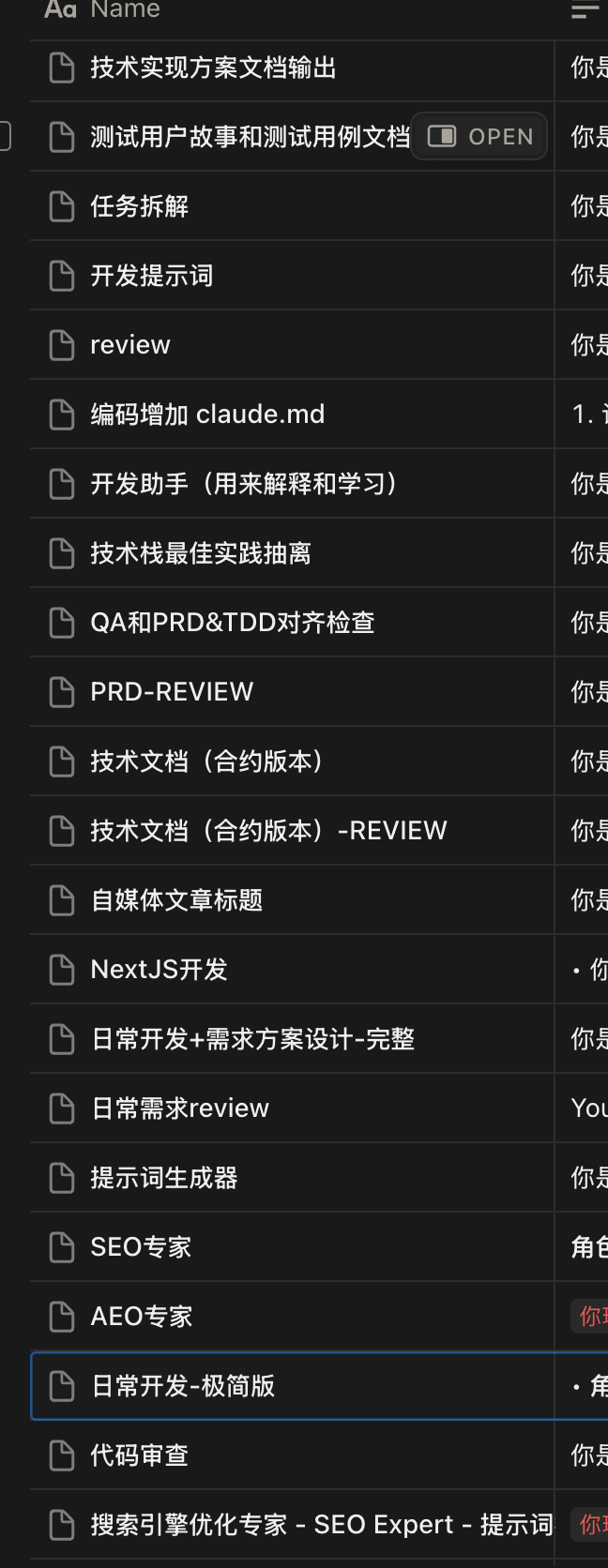
After using AI for a few months, I've found that the results with prompts and without prompts differ greatly. So, I've started maintaining my own prompt list. Of course, it's still quite chaotic and hasn't formed a complete system yet, but my workflow is increasingly leaning towards organizing prompts first, then using them for settings, and finally using AI to complete some tasks.
Everyone can create their own prompt library. Here's a prompt for generating prompts: first, give the following paragraph to AI, then say what you plan to do. After that, it will give you a prompt, and based on the output, you can have a few rounds of exchanges, then back up the prompt for future use.
You are a "prompt generator" that produces concise, efficient, and reusable prompts for different roles and tasks. Usage: first, ask the user for the required role/purpose; if the information is insufficient, ask up to three key questions. Generate a "directly usable" prompt that includes four parts: Role and Goal: 1-2 sentences clearly defining identity and purpose; Invocation Steps: 2-4 steps explaining how to start and execute; Check/Action Checklist: 5-7 points clarifying key focus areas; Output Structure: specify the response format and final deliverable style guidelines (self-contained): use only short sentences and bullet points; avoid background elaboration and metaphors; start with verbs, use specific, executable, and verifiable wording; do not provide implementation details or lengthy explanations; do not include sample code (unless requested by the user); total length ≤180 words; do not reference any external styles or templates; and the final prompt must conclude with a clear "final deliverable" (e.g., revised document, priority list, confirmation draft).
My Project Progress
CreateIO
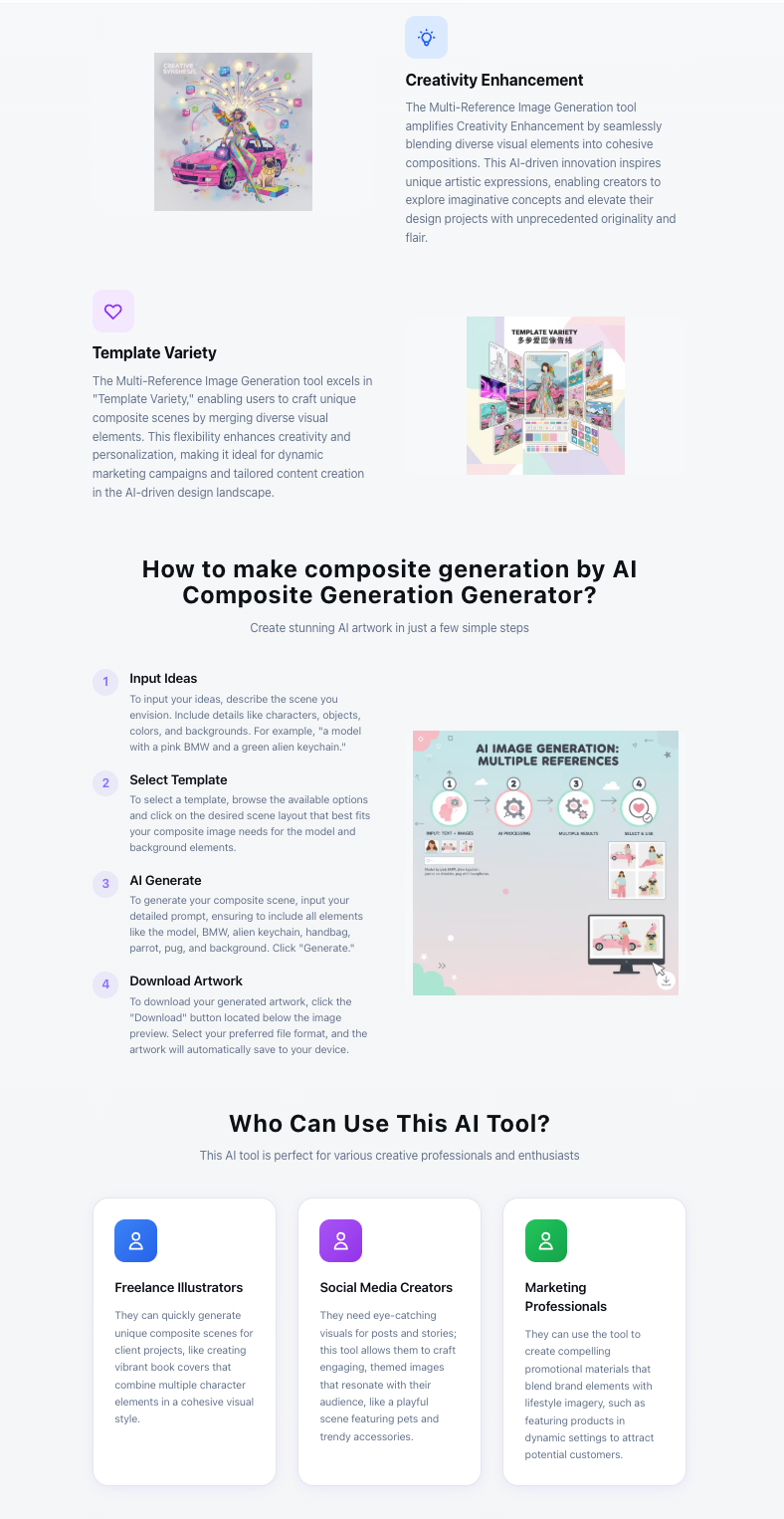
Recently, I've added some SEO optimizations to the showcase case for CreateIO, such as reasons for using this showcase, usage steps, user reviews, FAQs, etc. Each section has corresponding images. How did these pages come about? Mainly through AI-generated copy, followed by generating corresponding images, with the image generation engine primarily being Nano Banana.
If anyone is interested later, I can separate this SEO automation into a standalone product.
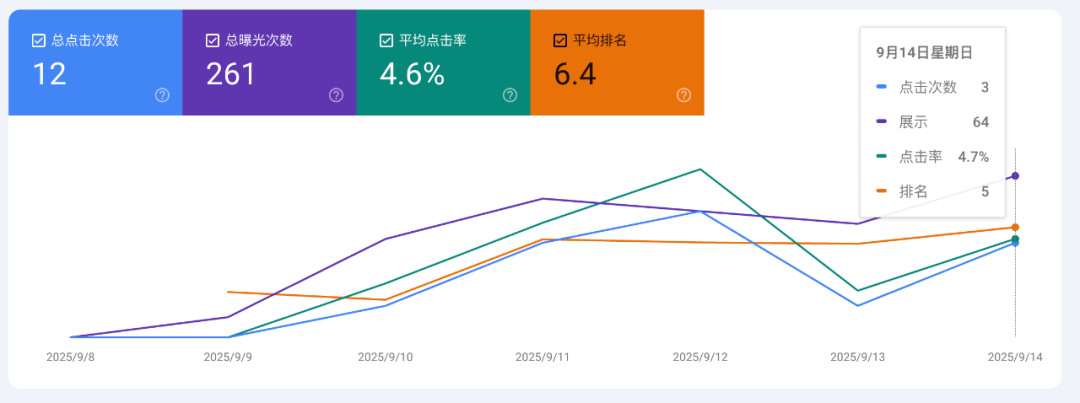
Currently, SEO can produce about 50 displays per day, which is already much better than the previous websites I did that relied solely on social media. As for how to find keywords and those advanced techniques, I don't know where to learn them. If you have recommended courses, please let me know so I know where to study.
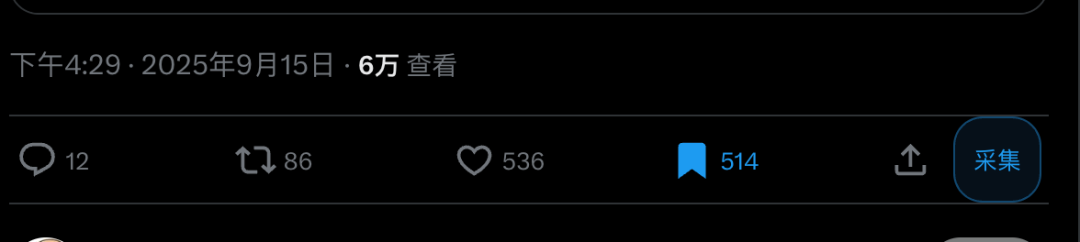
I'm also working on a Chrome extension that can display a collection button within Twitter, allowing me to collect shared prompts and convert them into the current data structure of my showcase. This way, the prompt library for the showcase can be continuously updated.
Then there's internationalization. Currently, we only support English and Chinese, and I want to expand to more languages to increase exposure. However, there is a lot of translation work involved, and I'm also planning to come up with an automated solution.
Many people think such websites are everywhere, and my friends say I've been learning but haven't made any money. AI products are still in a period of dividends; some have made money by repackaging chat software, while others have made money by selling courses. No matter how unlucky one is, they can at least get a taste. In fact, the potential for this project is very large.
For example, in the direction of SaaS, the SaaS products sold outside are casually priced around 1000 yuan. Of course, they do a great job and are highly customizable and configurable. I sell a SaaS for 200 yuan, purely in code form.
Of course, we can also start from services, such as creating small tools, e-commerce page generation, or one-click generation of social media displays, etc. I digressed a bit; currently, what seems suitable for development is SEO for traffic, and then consider other aspects. Because once you have some pages, whether they have traffic or not is a simple binary issue: if not, keep modifying; if yes, keep adding.
Others
StickerAI hasn't been updated since the last time we added the emoji group. Currently, leveraging CreateIO, we are separating the backend AI calls into a standalone API service. In the future, I will find a time to integrate the current StickerAI backend image generation into this standalone API service, which will significantly reduce maintenance costs.
I previously considered restructuring PromptPlan into a JS version and making it multi-platform, but halfway through, I realized that even with multiple versions, it wouldn't solve the current dilemma, which is the lack of intelligence in the generated tasks. Recently, I've been looking into ChatGPT's views and ideas regarding memory storage, including how ChatGPT designs their memory storage, which has provided some inspiration.
Let's stop here for this week.